The dates
Chinese New Year falls on 6 February 2027, a Saturday. New Year's Eve is the day before, 5 February, and the public holiday runs from 5 to 13 February, nine days in all. Two weekends are worked to pay for the length: 31 January and 14 February.
The State Council published the arrangement on 5 November 2026, which is worth knowing if you are booking flights. Fares for the week before the holiday climb from the moment the notice lands, not from the moment the calendar turns.
For a Chinese reader the day matters more than the date on the notice: 除夕 (Chúxī) is the family evening, and 大年初一, the first day of the first month, is when the visiting starts.
What 2027 is
2027 is counted as 丁未, a Fire Goat year. The Horse year that began in 2026 runs out on 5 February, and the Goat takes over the next morning.
English has to choose between goat, sheep and ram, and different translators choose diffrently, which is why you will see all three on the same poster. Chinese does not choose. 羊 (yáng) covers the whole family of animals, and the zodiac animal has been drawn as a goat in some centuries and a sheep in others.
One piece of history is useful here. The old character for 羊 was used for 祥 (xiáng), meaning auspicious, and bronze vessels carry the two words 吉羊 for good fortune. In a Goat year the puns come back out, which is the next section.
Greetings that work that week
| Word | Pinyin | Meaning | Note |
|---|---|---|---|
| Chūnjié | the Spring Festival | ||
| chú xì | New Year's Eve | ||
| zhèng yuè | the first month of the lunar year | ||
| bàinián | to pay New Year calls | ||
| tuányuán | a reunion, to be together again | ||
| niányèfàn | the New Year's Eve dinner | ||
| hóngbāo | a red envelope, money in a red packet | ||
| yāsuìqián | New Year money given to children | ||
| chūnlián | the red couplets pasted on doors | ||
| shǒusuì | to stay up late on New Year's Eve | ||
| biānpào | firecrackers | ||
| dēnglong | a lantern | ||
| niánhuò | the food and gifts bought for the week | ||
| yuánxiāo | the fifteenth night, and the sweet dumplings eaten then | ||
| chūnyùn | the Spring Festival travel rush | ||
| shēngxiào | the twelve-year zodiac cycle | ||
| xǐqì yángyáng | full of cheer, joyful on every side | ||
| sān yáng kāi tài | the turn toward good fortune |
新年快乐 (xīnnián kuàilè) is the greeting that fits everywhere. 恭喜发财 (gōngxǐ fācái) is the one you hear in shops, from taxi drivers and from relatives who are about to hand you a red envelope. 万事如意 (wànshì rúyì) is the polite closing line, the one you write on a card.
Then there are the Goat ones. 羊年大吉 (yáng nián dàjí) wishes the year well. 喜气洋洋 means everyone is cheerful, and it contains 洋, which sounds exactly like 羊. 三阳开泰 describes the return of good weather, and it has been used on doors in Goat years for centuries because 阳 and 羊 are homophones. A teacher will point out that the original phrase has nothing to do with animals, and the pun is the whole reason it shows up on a spring couplet in a year like this one.
What is on the table
The meal on the evening of 5 February is 年夜饭, the reunion dinner, and it is the one meal of the year that people travel across the country for. Fish is on the table in most homes because 鱼 (yú, fish) sounds like 余 (yú, surplus), and 年年有余 means a surplus every year. Dumplings in the north are folded to look like old silver ingots. In the south, and in Guangxi, you are more likely to see 汤圆 and 年糕 on the table, along with a whole chicken and a pot of soup that has been going since the morning.
If you are invited to one, the useful moves are simple. Take fruit rather than wine. Wait for the oldest person at the table to sit first. Eat what is put in front of you, and leave a little on the plate at the end rather than scraping it clean.
春运, the fortnight that moves the country
The travel rush around the festival is called 春运 (chūnyùn), and it is the largest annual movement of people anywhere. Trains out of the big cities sell out within minutes of tickets opening, about two weeks before the holiday. A seat on the 5 February trains south from Guangzhou is worth planning for in November, which is now.
Two things help if you are travelling in that window. Buy the return leg at the same time as the outbound one, because the crush at the end of a holiday is worse than the crush at the start. And if you have a choice, travel on 初七 or 初八 (the seventh and eighth days of the first month, 12 and 13 February) rather than on the first three days, when everyone in the country is on the same road.
Spring Festival in a small city
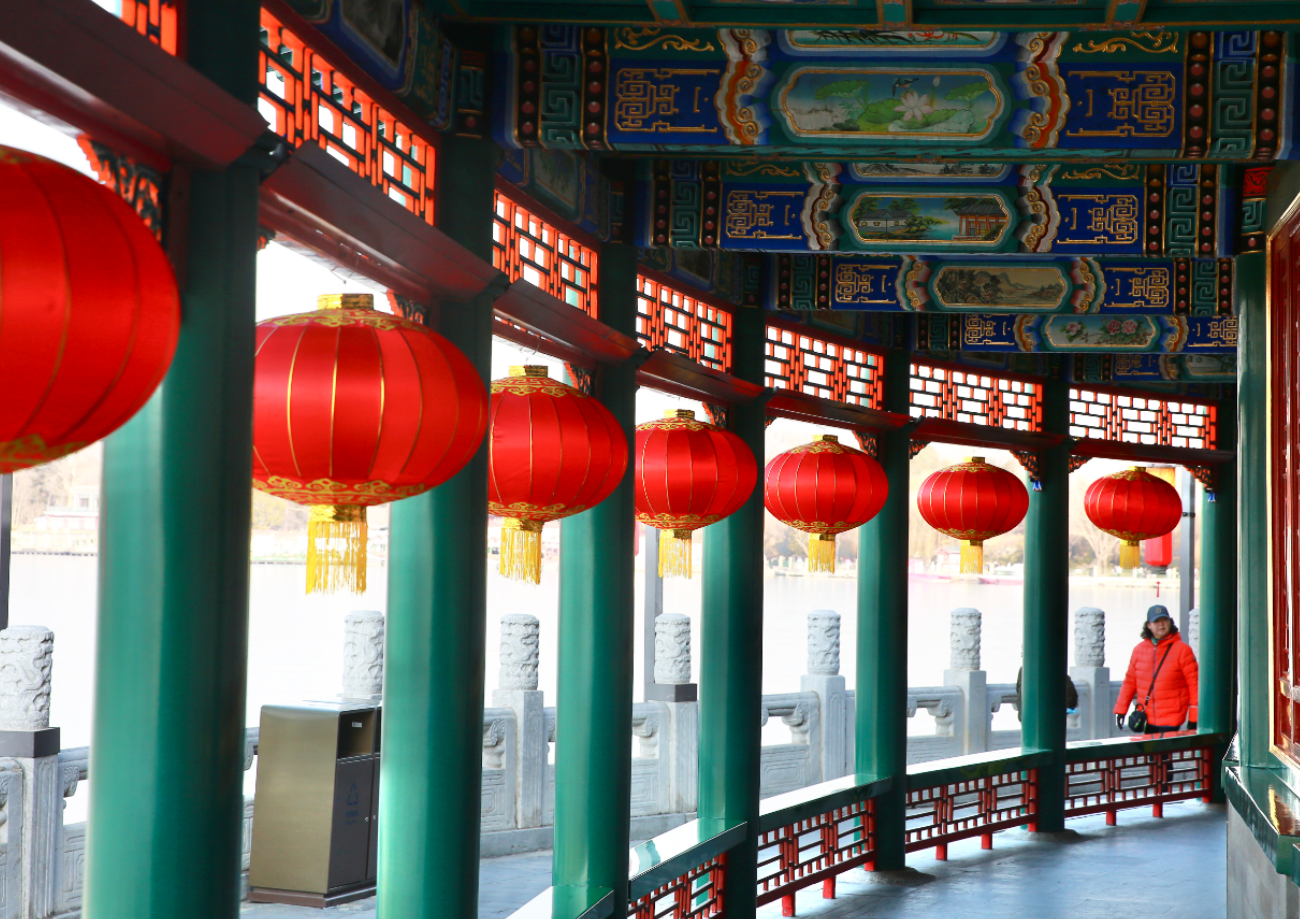
Beihai empties a little and slows down a lot. The seafood restaurants on the waterfront close for two or three days and put up a handwritten sign with a date to come back. The old street fills with lanterns and with people from out of town. The beach is quiet in the mornings.
That is the trade most visitors do not expect. A city like this gives you the holiday without the crowds of a big tourist destination, and you get to see the part of Spring Festival that happens at home: the shopping, the cooking, the visiting, the red packets handed to children in the street. Beihai through the year covers what the seasons are like, getting to Beihai covers the airport and the two stations, and the gallery has photographs from last year's festival.
Someone who comes in early February should know that many small businesses close for the whole nine days. Our own office keeps a phone on, and the FAQ says how to reach us over the holiday.
The fifteenth day of the first month is 元宵节 (Yuánxiāo Jié), the lantern festival, which falls on 19 February 2027. Sweet rice dumplings are eaten that night, and the holiday is properly over.
Sentences for the week
- New Year's Day is 6 February 2027, a Saturday, and New Year's Eve is 5 February.
- The public holiday runs 5 to 13 February, nine days, paid for by working 31 January and 14 February.
- 2027 is 丁未, a Fire Goat year, and the Horse year ends on 5 February.
- 羊 covers goat, sheep and ram, so English translations vary and Chinese never has to choose.
- 三阳开泰 and 喜气洋洋 are the greetings that only work in a Goat year.
FAQ
When is Chinese New Year in 2027?
6 February 2027, a Saturday. New Year's Eve is 5 February and the public holiday runs from 5 to 13 February, nine days.
What animal is 2027?
The Goat, in a year counted as 丁未. The Horse year that began in 2026 ends on 5 February 2027.
Do people in China take all nine days off?
The public holiday is nine days and many shops close for most of it. Two weekends are worked to pay for the length: 31 January and 14 February.
What do you say to someone at Chinese New Year?
新年快乐 works with anyone. 恭喜发财 is what you hear in shops and from relatives. In a Goat year, 羊年大吉 and 三阳开泰 are the seasonal ones.
Is Beihai a good place to spend the Spring Festival?
It is a quiet choice. The weather is mild, the crowds are smaller than in the big tourist cities, and you can see the family side of the holiday rather than only the fireworks.
Comments
No account needed. Leave a name and say what you think — Chinese or English, either is fine.
Loading comments…